

x simply holds 14.
In Rhyme, we can write:
x now holds multiple values in superposition. Here, the value of x is a combination of 14 and 23.
But what does that actually look like? Let’s take a peek inside.
What’s inside a qint?
Each of the values 14 and 23 participates in the superposition with an amplitude. We can inspect their amplitudes:
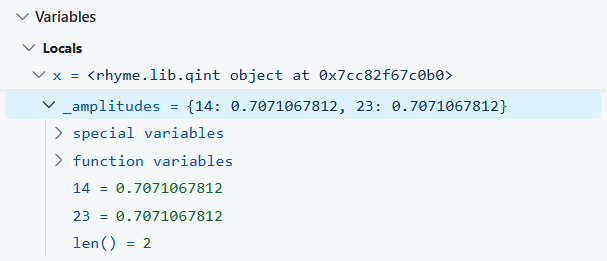
14 and 23 both participate in the superposition with equal amplitudes:
So the superposition looks like:
But there is a problem: quantum mechanics does not allow us to directly see the amplitudes. If we want to get information from a superposition, we have to observe it.
From a superposition to a value
Let’s make this concrete. Suppose14 and 23 are two node IDs in a network, representing two possible next hops for a packet:
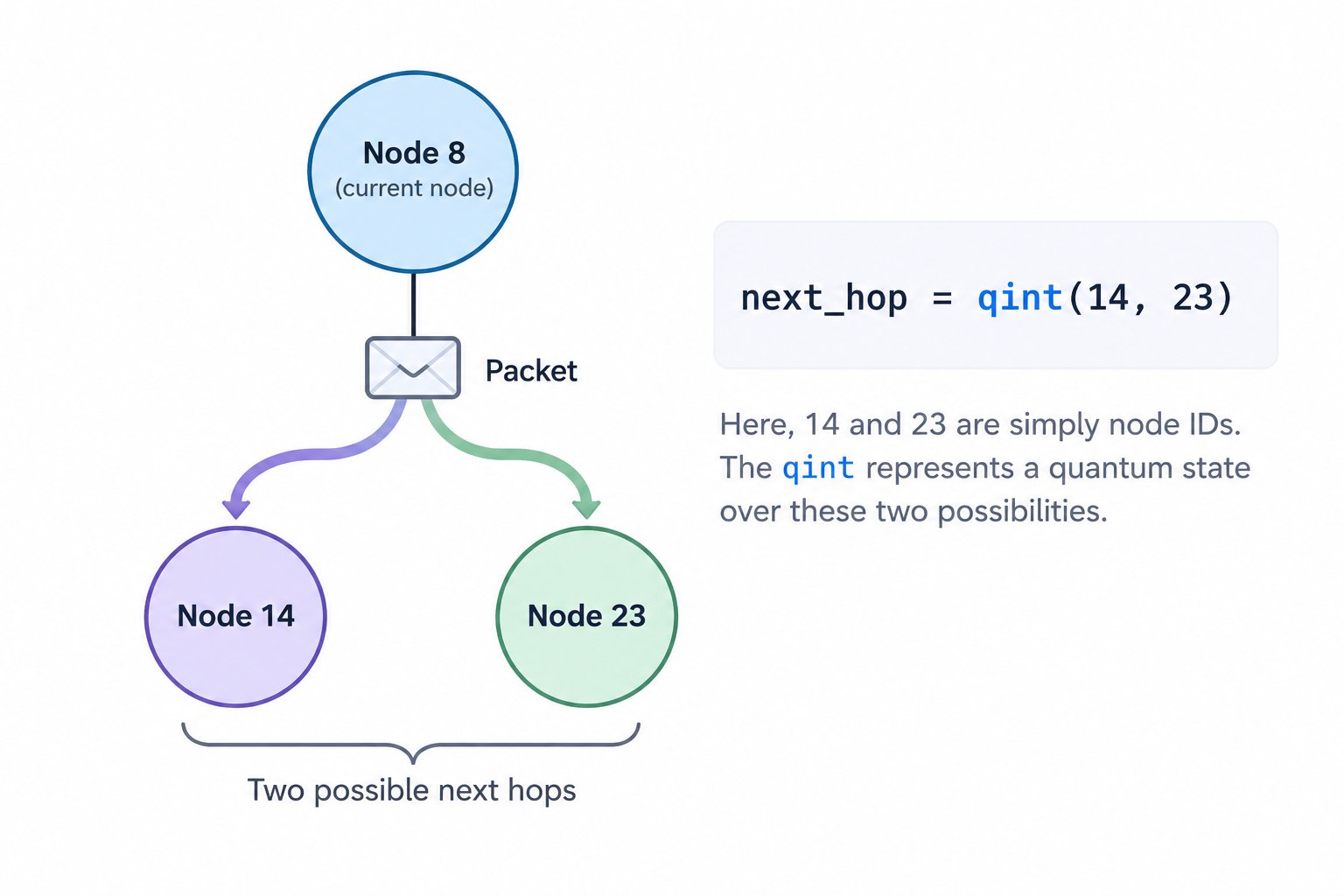
observe() collapses the superposition to exactly one of the values that participate in it. Before observation, both values co-exist as possibilities.
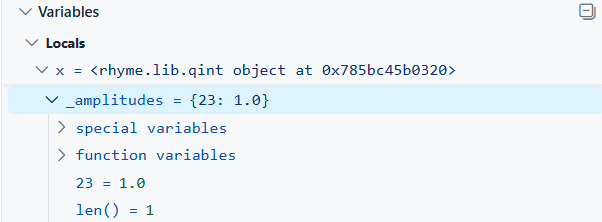
23 is the observed value, with an amplitude of 1, while the amplitude of 14 is now 0.
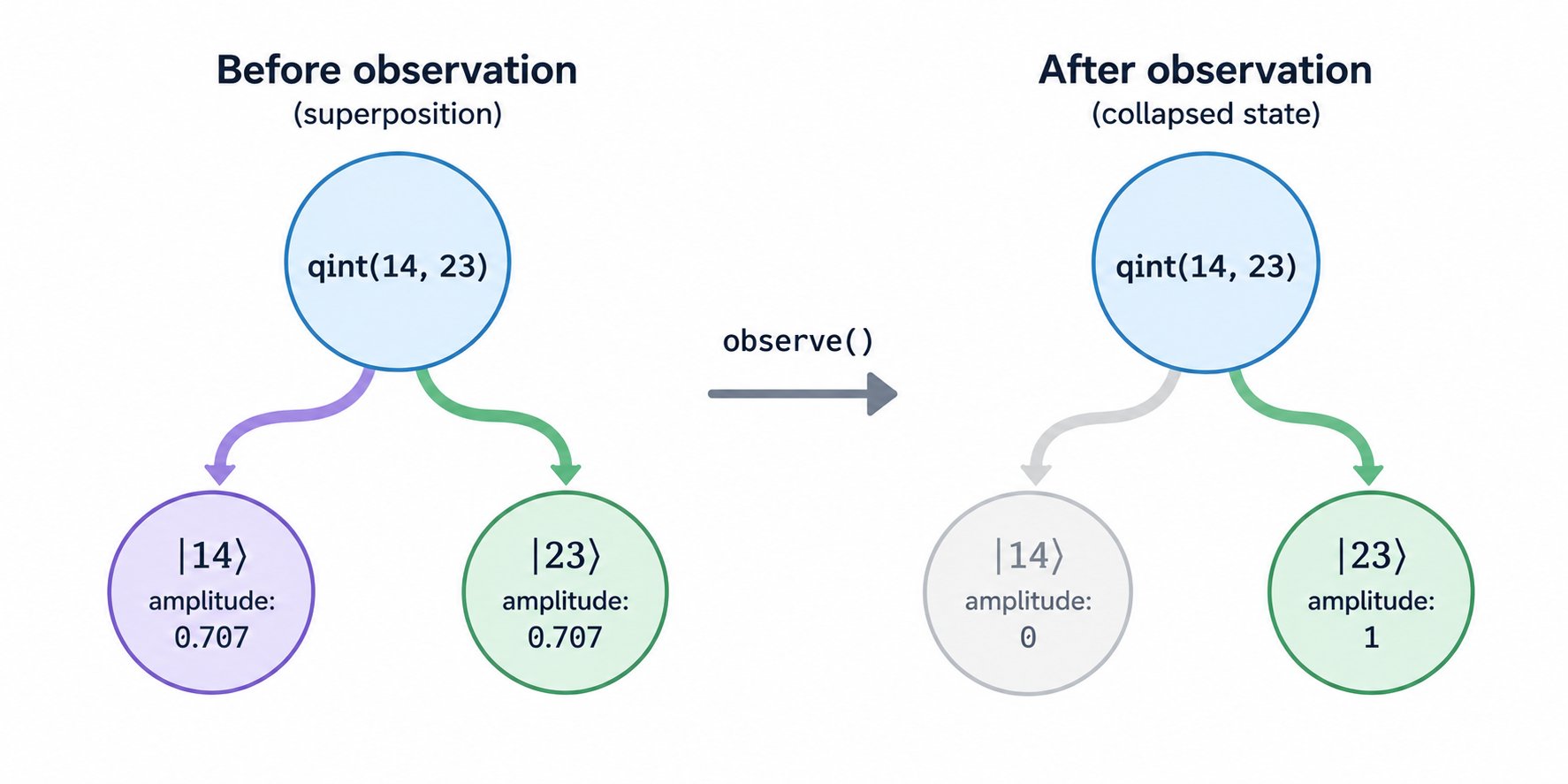
14 and 23 have equal probabilities of being observed: 50% each.
For this example, the observed value can be either 14 or 23. Since the two values have equal amplitudes, repeated runs produce the two values with equal probabilities.
More than two values
Aqint can also represent several values at once.
For example:
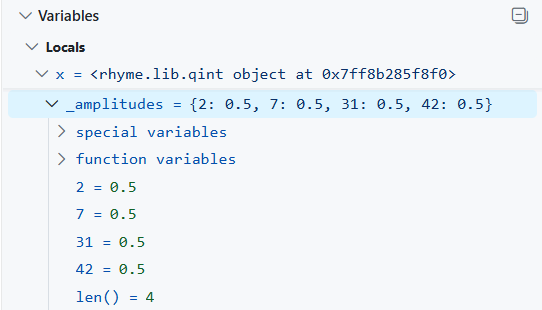
qint creates a value in superposition.
observe() collapses the superposition to one of its participating values.
And that’s your first step into Rhyme!!